


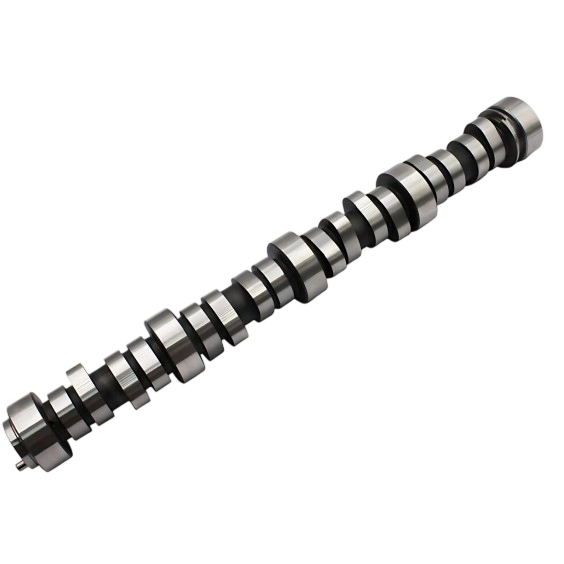
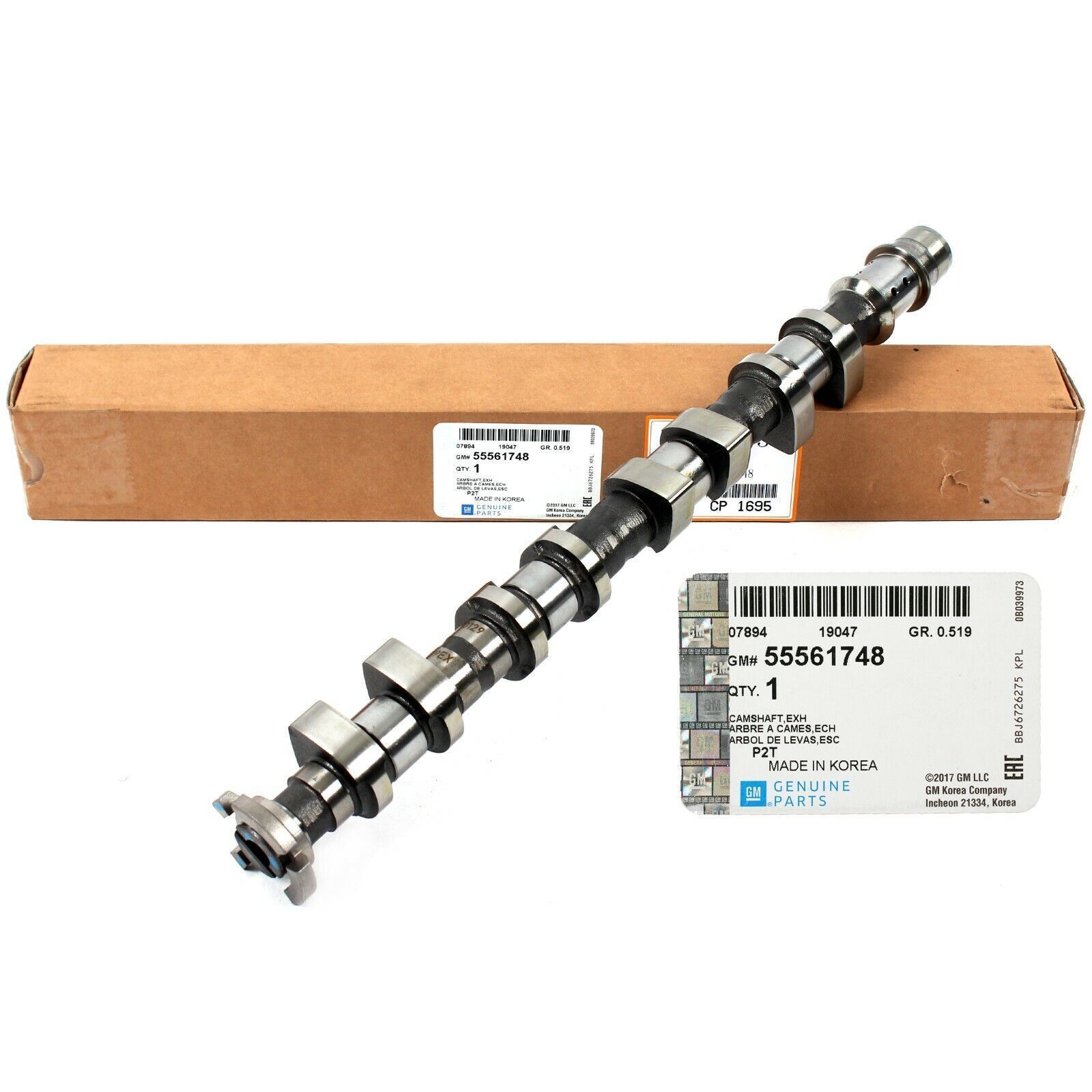
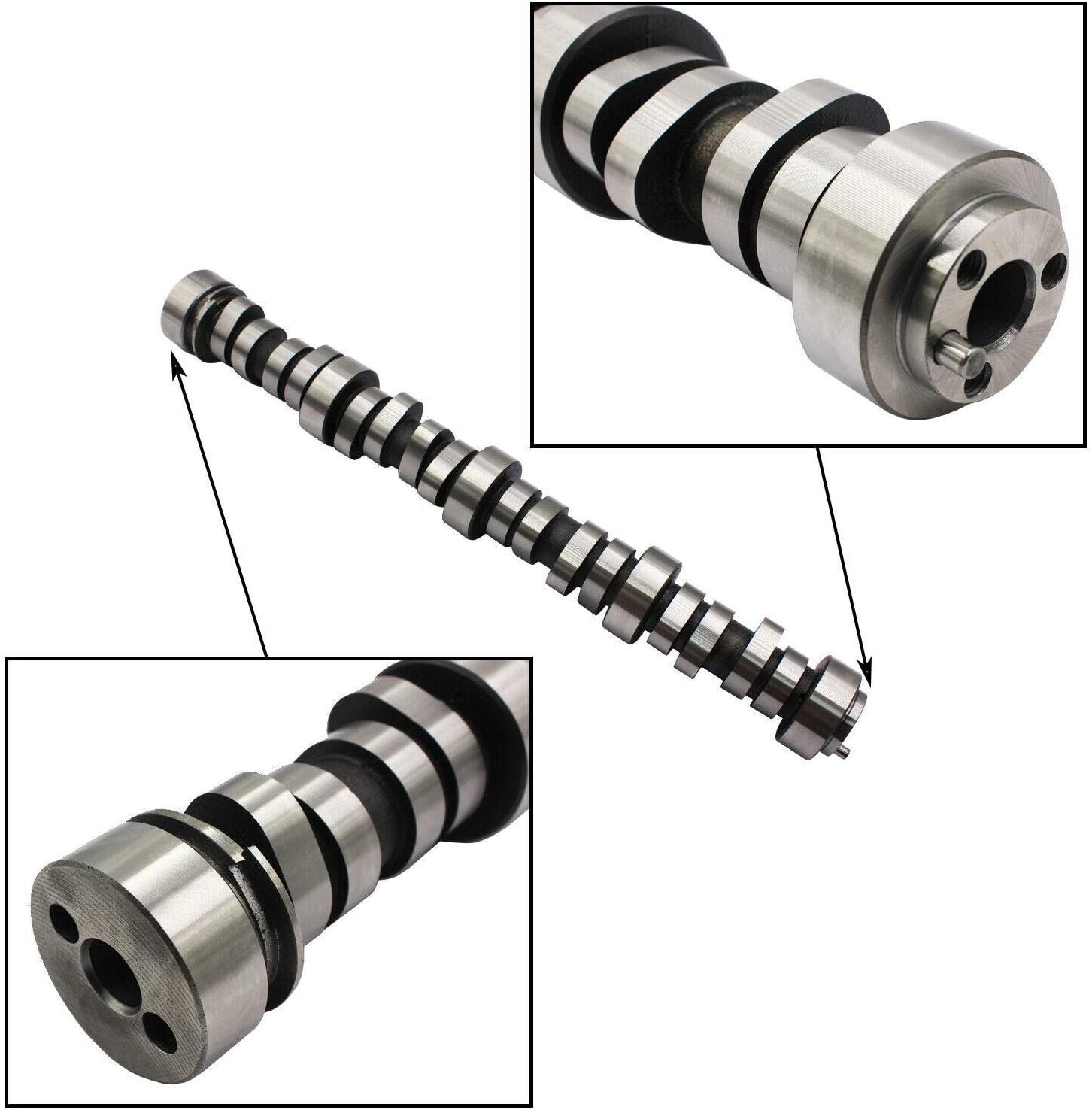
A camshaft is a precisely machined shaft within an internal combustion engine that features a series of pointed cams, or "lobes." As the camshaft rotates, these lobes push against lifters or followers, which in turn open the engine's intake and exhaust valves. Driven by the crankshaft via a timing belt or chain at exactly half the crankshaft's speed, the camshaft's profile is the "brain" of the engine's valvetrain. It dictates exactly when, how high, and for how long each valve opens, directly controlling the engine's breathing and defining its performance characteristics.
Functions of a Camshaft
Actuate Engine Valves
Its primary function is to convert rotational motion into the linear motion needed to open and close the intake and exhaust valves.
Control Valve Timing
The shape of the lobes (lift and duration) determines how long and how far the valves open, which is critical for airflow and engine performance.
Drive Other Components
In older pushrod engines, the camshaft often drives the distributor, oil pump, and mechanical fuel pump via auxiliary gears.
Define Engine Character
The camshaft's profile is the single biggest factor in determining an engine's powerband, whether it's designed for low-end torque or high-RPM horsepower.
Symptoms of a Failing Camshaft
Camshaft failure is a major internal engine problem. It often indicates a lubrication issue and can cause significant performance loss and further damage if ignored.
Ticking, Tapping, or Clicking Noise
A repetitive ticking sound from the top of the engine that increases with RPM often indicates excessive clearance from a worn-down cam lobe and lifter.
Engine Misfires and Rough Idle
A "flat" or worn lobe will not open its corresponding valve(s) fully, causing that cylinder to run poorly and create an engine misfire.
Significant Loss of Power
Worn cam lobes prevent the engine from breathing efficiently, leading to a noticeable decrease in acceleration and overall horsepower.
Backfiring Through Intake or Exhaust
Incorrect valve timing from a severely worn cam can allow the combustion process to escape into the intake manifold or exhaust system.
Metal Shavings in Oil
A clear sign of advanced failure. Metal particles from the lobes and lifters will circulate in the oil, visible during an oil change.
Types of Camshafts
| Type | Key Feature | Application/Notes |
|---|---|---|
| Overhead Cam (OHC) | Located in the cylinder head | Standard in most modern engines (SOHC/DOHC) |
| Overhead Valve (OHV) | Located in the engine block; uses pushrods | Common in classic V8s and some modern trucks |
| Roller Camshaft | Uses lifters with a roller wheel | Reduces friction; standard in virtually all modern engines |
| Flat Tappet Camshaft | Uses a flat-bottomed lifter | Older design; requires special high-zinc oil |
Camshaft vs. Crankshaft
What is a Crankshaft?
The crankshaft is the backbone of the engine, located in the bottom end. It converts the linear up-and-down motion of the pistons into the rotational force that ultimately drives the vehicle's wheels. It is the primary rotating assembly in the engine.
| Attribute | Camshaft | Crankshaft |
|---|---|---|
| Function | Controls valve operation | Converts piston motion to rotation |
| Rotation Speed | Half of engine RPM | Full engine RPM |
| Location | Top of engine (Head/Block) | Bottom of engine (Block) |
| Shape | Shaft with eccentric lobes | Shaft with throws and journals |
The Crankshaft is the engine's main power axle; the Camshaft is the brain stem controlling its breathing.