


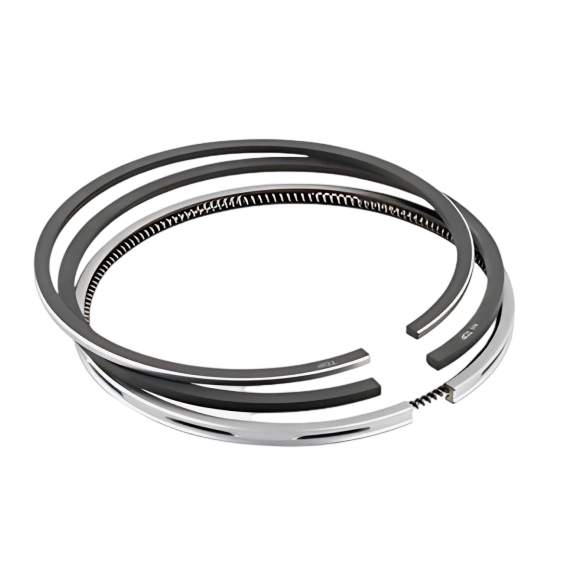
Piston rings are metallic split rings that are fitted into grooves on the outer diameter of an engine's pistons. Despite their simple appearance, they perform several vital and extremely demanding functions. A typical piston has three rings: two upper compression rings and one lower oil control ring. The compression rings form a dynamic seal against the cylinder wall, preventing high-pressure combustion gases from escaping into the crankcase. The oil control ring scrapes excess oil from the cylinder wall, preventing it from entering the combustion chamber. Together, these rings are essential for creating compression, managing lubrication, and transferring heat.
Functions of Piston Rings
Seal Combustion Pressure
The top rings form a seal to trap the force of combustion, pushing the piston down to create power and preventing power-robbing "blow-by."
Regulate Oil Film
The oil control ring scrapes the majority of oil off the cylinder wall, leaving a microscopic film just thick enough to lubricate the other rings.
Transfer Heat
They provide a crucial path for heat to travel from the hot piston crown, through the rings, and into the cylinder wall to be absorbed by the coolant.
Stabilize the Piston
The rings help support the piston within the cylinder bore, preventing it from rocking and making direct contact with the cylinder wall.
Symptoms of Failing Piston Rings
Worn piston rings are a major cause of engine wear and failure. Their failure requires a complete engine rebuild, as the pistons must be removed for replacement.
Excessive Oil Consumption
The most common symptom. A worn oil control ring allows excess oil into the combustion chamber, where it is burned.
Blue Smoke from Exhaust
Visible blue or greyish smoke, especially during acceleration after idling, is a clear sign of oil being burned due to failing rings.
Poor Performance and Acceleration
Worn compression rings lead to "blow-by," a loss of cylinder pressure that results in a noticeable lack of engine power.
Low Compression Test Results
A definitive diagnostic test. Low readings on a compression or leak-down test often point directly to worn piston rings.
Piston Rings vs. Piston
What is a Piston?
The piston is the main cylindrical body that moves up and down in the cylinder. It is the component that the piston rings are fitted onto. The piston's job is to transfer the force of combustion to the connecting rod, while the rings are responsible for creating the seal.
| Attribute | Piston Rings | Piston |
|---|---|---|
| Function | Sealing & Oil Control | Transmitting Force |
| Role | Wearable Sealing Component | Main Structural Component |
| Material | Cast Iron / Steel | Aluminum Alloy |
| Failure Symptom | Oil Burning, Blow-by | Knocking, Seizure |
If the Piston is a syringe plunger, the Piston Rings are the rubber seals at its tip that actually create the pressure.