


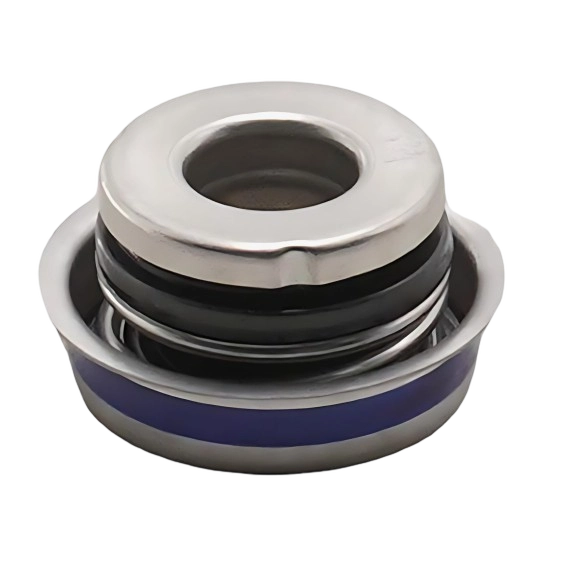
A mechanical seal is a sophisticated device used to contain fluid within a vessel (like a pump or mixer) where a rotating shaft passes through a stationary housing. It consists of two main components: a rotating primary ring that spins with the shaft and a stationary mating ring that is fixed to the housing. These two rings have ultra-flat, lapped faces that are pressed together by spring force and hydraulic pressure, creating a near-perfect seal. A thin film of the processed fluid lubricates the faces, allowing for a robust, dynamic seal that can withstand high pressure, temperature, and speed with minimal leakage.
Functions of a Mechanical Seal
Prevent Leakage
Its primary function is to provide a near-perfect seal, preventing the product being pumped from leaking out into the environment.
Contain System Pressure
It maintains the internal pressure of the system, which is crucial for the efficient operation of pumps and compressors.
Exclude Contaminants
The seal also acts as a barrier to prevent dirt, dust, and other external contaminants from entering the clean fluid system.
Protect Shaft & Bearings
Unlike older packing methods, a mechanical seal does not wear a groove into the pump shaft and protects equipment bearings from fluid contamination.
Symptoms of a Failing Mechanical Seal
Seal failure is the number one cause of pump downtime. A leak not only wastes product but can also create safety hazards and lead to catastrophic bearing failure.
Visible Leakage
The most obvious sign. A steady drip, spray, or puddle of fluid forming under the pump's seal chamber indicates failure.
Squealing or Grinding Noise
This can indicate that the seal has run dry and the faces are grinding against each other, or that leaking fluid has contaminated the pump's bearings.
Residue or Caking Around Seal Area
A minor leak of a fluid that crystallizes or solidifies upon contact with air will leave a visible deposit, indicating the start of a failure.
Overheating Pump
Excessive friction from a failing seal can generate significant heat at the seal chamber, causing the pump to run hot.
Mechanical Seal vs. Gland Packing
What is Gland Packing?
Gland packing (or compression packing) is the traditional sealing method. It uses rings of braided, rope-like material that are compressed into a "stuffing box" around the shaft. The packing is designed to have a controlled, constant drip to lubricate and cool itself. It requires regular adjustment and causes wear on the shaft.
| Attribute | Mechanical Seal | Gland Packing |
|---|---|---|
| Leakage | Virtually Zero (Vapor) | Controlled Drip (By Design) |
| Maintenance | Low (Replace on Failure) | High (Regular Adjustment) |
| Shaft Wear | Minimal | Significant (Grooving) |
| Initial Cost | Higher | Lower |
A Mechanical Seal is a modern ceramic disc faucet that doesn't drip; Gland Packing is an old washer faucet that needs constant tightening.