


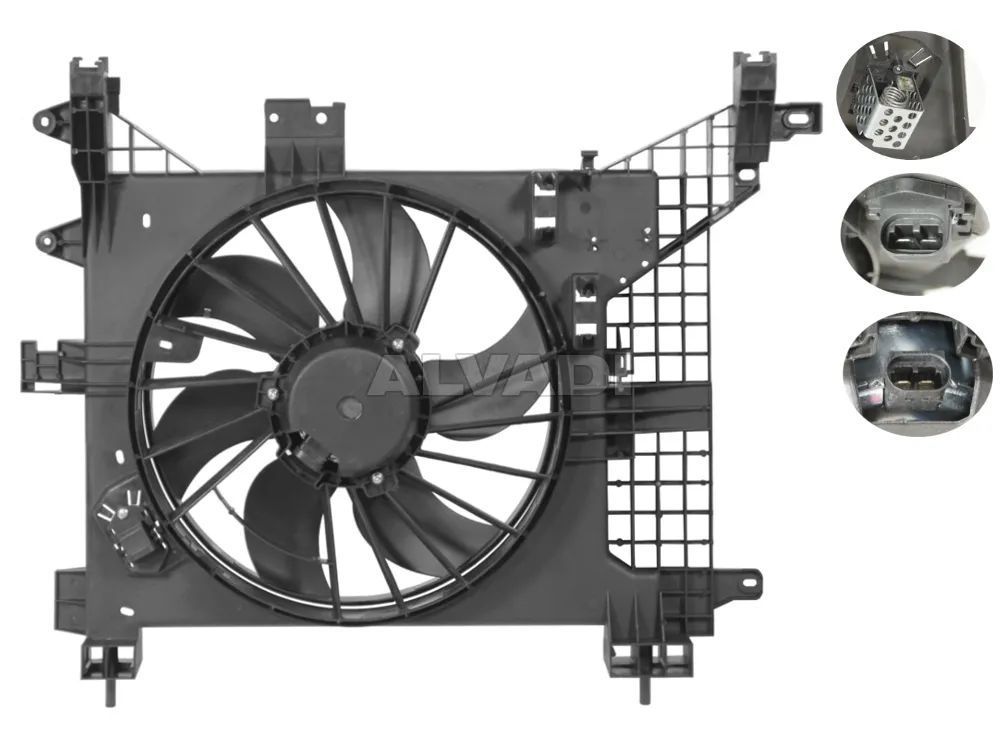
The radiator fan is a critical component of a vehicle's cooling system, located directly behind the radiator. Its primary purpose is to pull a large volume of air through the radiator's cooling fins, especially when the vehicle is stationary or moving at low speeds where natural airflow is insufficient. This process dissipates heat from the engine coolant circulating within the radiator, preventing the engine from overheating. In modern vehicles, it also pulls air through the A/C condenser, making it essential for proper air conditioning performance.
Functions of a Radiator Fan
Cool Engine Coolant
It generates the necessary airflow to remove heat from the engine coolant as it passes through the radiator.
Enable A/C Operation
It pulls air across the A/C condenser (mounted in front of the radiator) to cool the refrigerant, which is essential for the A/C to blow cold.
Prevent Overheating at Low Speeds
It compensates for the lack of natural airflow when the vehicle is in stop-and-go traffic or idling.
Provide On-Demand Cooling
Electric fans are controlled by the ECU and only activate when coolant temperatures rise, saving energy and fuel.
Symptoms of a Failing Radiator Fan
A non-functional radiator fan is a primary cause of engine overheating in city driving conditions. Any symptoms should be diagnosed promptly to prevent severe engine damage like a blown head gasket.
Engine Overheating in Traffic
The most classic symptom. The temperature gauge climbs when idling or in slow traffic but returns to normal at highway speeds.
A/C Blows Warm at Idle
The air conditioning works on the highway but gets warm at a stoplight because the fan isn't pulling air through the condenser.
Fan Does Not Activate
When the engine gets hot or the A/C is turned on, the fan should engage. If it doesn't, it could be a bad motor, relay, fuse, or temperature sensor.
Loud or Wobbly Fan Operation
A humming, grinding, or vibrating noise indicates a failing motor bearing. A visible wobble is dangerous as the blades could break and cause damage.
Electric Fan vs. Mechanical Fan
What is a Mechanical Fan?
A mechanical fan is mounted to the engine's water pump pulley and is driven by the main accessory belt. It uses a thermostatic clutch that engages the fan when hot air from the radiator warms it, causing it to spin at a speed proportional to the engine. When cool, the clutch disengages, allowing the fan to freewheel.
| Attribute | Electric Fan | Mechanical Fan |
|---|---|---|
| Power Source | Electric Motor (Battery/Alternator) | Engine Belt (Crankshaft) |
| Efficiency | More efficient (runs only when needed) | Less efficient (creates parasitic drag) |
| Control | Precise (ECU and sensors) | Mechanical (Thermostatic clutch) |
| Application | Most modern cars (especially FWD) | Older trucks, SUVs, RWD cars |
An Electric Fan is a modern smart A/C unit that turns on when needed; a Mechanical Fan is an old-school window fan tied to a windmill.