


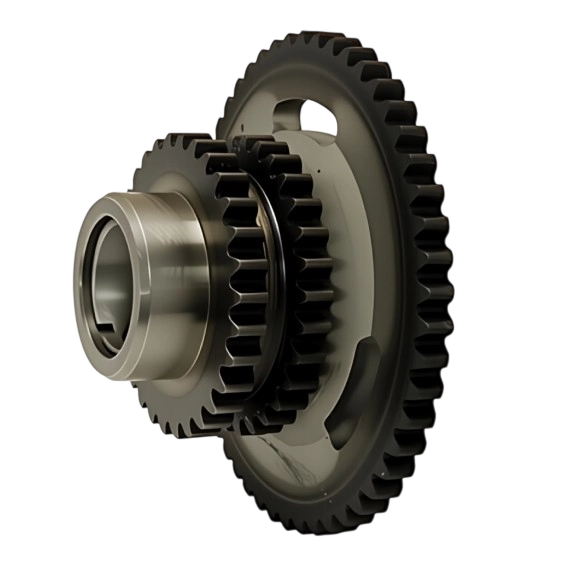
A timing chain sprocket, or timing gear, is a toothed wheel that engages directly with the timing chain. In a typical overhead cam engine, there are at least two primary sprockets: a drive sprocket on the crankshaft and one or more driven sprockets on the camshaft(s). Made from hardened steel, their teeth are precision-machined to mesh perfectly with the chain's rollers, ensuring a positive, slip-free transfer of motion. This perfect engagement is what maintains the engine's critical valve timing.
Functions of a Timing Chain Sprocket
Transfer Rotational Force
The crank sprocket transfers engine rotation to the chain, and the cam sprocket(s) transfer this motion to the camshafts.
Maintain Precise Timing
The positive lock between the sprocket teeth and chain links ensures absolute synchronization with zero slippage.
Provide Gear Reduction
The camshaft sprocket has exactly twice the number of teeth as the crankshaft sprocket, creating the precise 2:1 ratio needed for a four-stroke engine.
Enable Variable Valve Timing (VVT)
Advanced camshaft sprockets, known as phasers, contain hydraulic passages to alter the camshaft's timing relative to the chain's rotation.
Symptoms of a Failing Timing Sprocket
Though durable, sprocket teeth do wear over many miles. A worn sprocket will rapidly accelerate wear on a new chain and guides, making its replacement during a timing service absolutely essential.
Increased Timing Chain Noise
As teeth wear, they develop a hooked or pointed shape that no longer meshes smoothly with the chain rollers, causing a rattling or grinding sound.
Premature Chain and Guide Wear
Sharpened sprocket teeth act like a file, rapidly wearing out the chain's rollers and the plastic surface of the guides.
Chain Skipping / Jumped Timing
Severely worn teeth may not hold the chain securely under load, allowing it to jump a tooth, which will cause misfires and a no-start condition.
Catastrophic Failure
In rare cases, a sprocket can crack or have teeth break off completely, which will jam the chain and cause immediate, severe engine damage.
Sprocket vs. V-Belt Pulley
What is a V-Belt Pulley?
A V-belt pulley, or sheave, is a smooth, grooved wheel designed for friction belts (like V-belts or serpentine belts). It does not have teeth. It transmits power via the wedging action and friction of the belt's sidewalls against the pulley's grooves. This type of drive is used for engine accessories.
| Attribute | Timing Chain Sprocket | V-Belt Pulley |
|---|---|---|
| Interface | Toothed (Positive Engagement) | Grooved (Friction Grip) |
| Function | Synchronization (Timing) | Power Transmission (Accessories) |
| Slippage | Not possible | Possible by design |
| Driven Component | Timing Chain / Belt | Serpentine / V-Belt |
A Timing Sprocket is like a bicycle gear, locking into a chain; a V-Belt Pulley is like the smooth wheel a rope wraps around.