


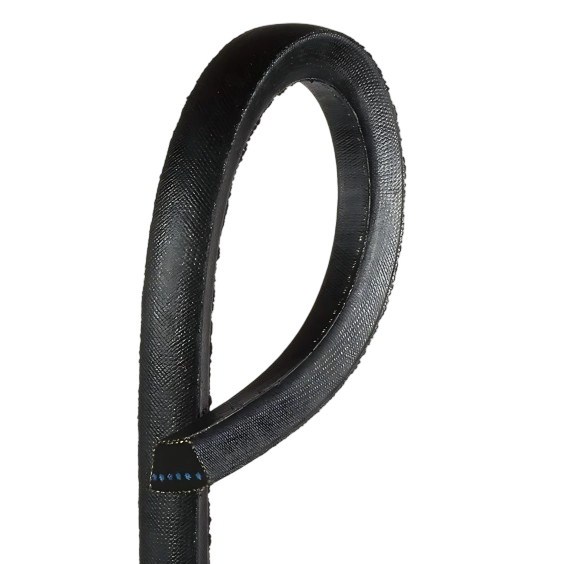

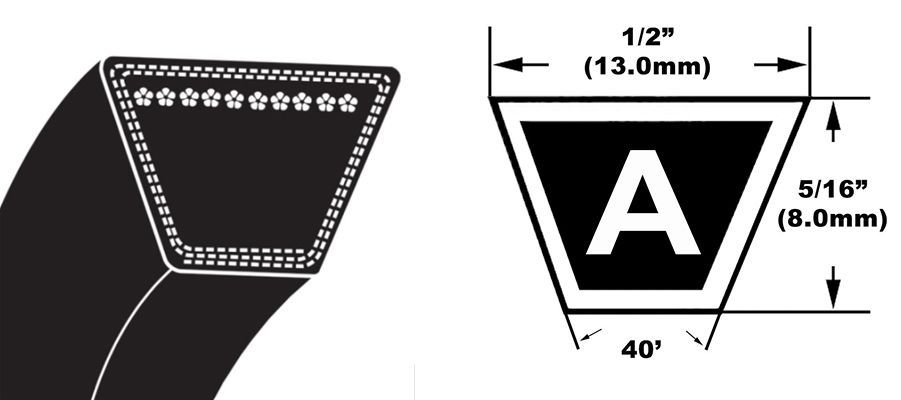
A wrapped V-belt is the traditional workhorse of power transmission. It is characterized by a full fabric cover, or "wrap," that completely encloses its internal structure of rubber compounds and tensile cords. This design provides a smooth, uniform surface that engages with the V-shaped grooves of pulleys (sheaves). Power is transmitted through the frictional grip of the belt's sidewalls against the pulley walls, creating a powerful wedging action. They are known for their durability, smooth operation, and reliability.
Advantages of a Wrapped V-Belt
Smooth and Quiet Operation
The continuous fabric wrap provides a smooth engagement with pulleys, resulting in lower noise and vibration compared to raw-edge belts.
Durability in Abrasive Environments
The full wrap acts as a protective shield, protecting the internal tension cords from dust, debris, and other abrasive contaminants.
Suitable for Clutching Applications
The fabric cover allows for a degree of controlled slippage, making it ideal for drives where a component is engaged via a tensioner clutch.
High Friction Grip
The durable cover provides a consistent, high-friction surface for reliable power transmission under proper tension.
Symptoms of a Failing Wrapped V-Belt
A failing V-belt compromises the performance and reliability of the machinery it drives. Ignoring signs of wear can lead to sudden failure and costly downtime.
Squealing Noise
A high-pitched squeal, especially on start-up or under heavy load, is a classic sign of belt slippage due to wear or low tension.
Visible Cracks or Fraying
Inspect the top and sides of the belt for cracks, splits, or frayed fabric, which indicate the material is degrading.
Glazed or Hardened Sidewalls
The sides of the belt should be dull and pliable. A shiny, hard surface (glazing) indicates heat damage and will cause slippage.
Belt "Bottoming Out"
If the belt's sidewalls are worn, it will ride on the bottom of the pulley groove instead of wedging against the sides, causing severe slippage.
Best Practices for Maintenance
Check Tension Regularly
Proper tension is the most critical factor for V-belt life. Follow manufacturer guidelines and use a tension gauge for best results.
Verify Pulley Alignment
Ensure pulleys are perfectly aligned in all planes to prevent excessive sidewall wear and belt rollover.
Inspect and Clean Pulleys
During a belt change, clean the pulley grooves of all debris and inspect them for wear, rust, or damage.
Wrapped V-Belt vs. Cogged V-Belt
What is a Cogged V-Belt?
A cogged V-belt has notches on its underside. These notches increase flexibility, allowing it to bend around smaller pulleys and dissipate heat more efficiently. This leads to higher efficiency and longer life in many applications, but it lacks the full protective cover of a wrapped belt.
| Attribute | Wrapped V-Belt | Cogged V-Belt |
|---|---|---|
| Flexibility | Standard | High (for small pulleys) |
| Heat Dissipation | Good | Excellent |
| Efficiency | Standard | Higher |
| Ideal Application | Dusty environments, clutching | High-speed, small pulley drives |
A Wrapped V-Belt is like a durable, all-season tire, while a Cogged V-Belt is a high-performance tire designed for flexibility and cooler running.