


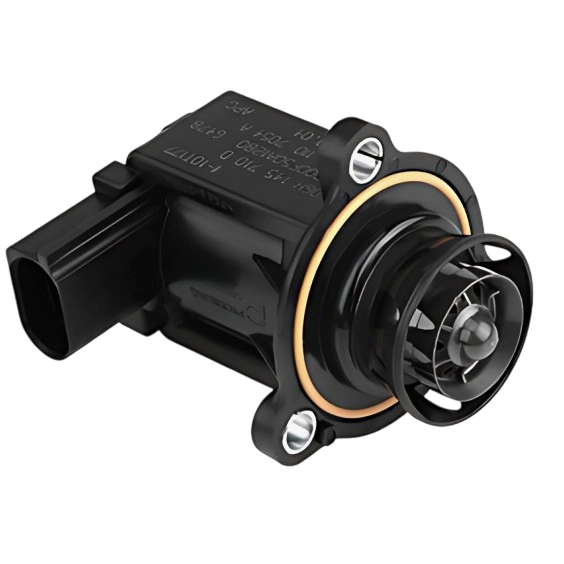
A turbocharger bypass valve, also commonly called a diverter valve or compressor bypass valve (CBV), is a pressure relief device that is essential for protecting the turbocharger. Located in the charge piping between the turbo's compressor outlet and the throttle body, its job is to release excess boost pressure when the throttle is suddenly closed. This prevents a pressure wave from surging back into the compressor wheel (a phenomenon known as "compressor surge"), which can damage the turbo's bearings. The bypass valve accomplishes this by re-routing, or "recirculating," the excess air back into the intake system before the turbocharger.
Functions of a Bypass Valve
Prevent Compressor Surge
Its primary function is to open during throttle lift-off, giving the pressurized air an escape path to prevent it from slamming back into the spinning compressor wheel.
Protect Turbocharger Bearings
By eliminating compressor surge, it prevents the immense axial stress that surge places on the turbo's shaft and delicate bearing assembly, extending its life.
Improve Throttle Response
By relieving pressure, it allows the turbo to continue spinning freely ("freewheeling"), reducing lag when the driver gets back on the throttle.
Maintain Metered Air
It recirculates air that has already been measured by the MAF sensor, keeping the ECU's fuel calculations accurate and preventing rich conditions.
Symptoms of a Failing Bypass Valve
A leaking bypass valve is a very common cause of low boost pressure and poor performance that is often misdiagnosed as a failing turbocharger.
Loss of Boost Pressure
The most common symptom. A torn diaphragm or weak spring allows boost to leak back into the intake instead of going to the engine.
Compressor Surge/Flutter Noise
A "choo-choo" or fluttering sound when you lift off the throttle indicates the valve is not opening to release pressure.
Check Engine Light
A leaking valve will often trigger an "underboost" code (P0299), while a stuck valve can cause an "overboost" code (P0234).
Poor Throttle Response
If the valve doesn't close properly, the turbo will struggle to build boost, leading to hesitation when you accelerate.
Bypass Valve vs. Blow-Off Valve (BOV)
What is a Blow-Off Valve?
A blow-off valve (BOV) performs the exact same function as a bypass valve—releasing pressure to prevent compressor surge. The key difference is *where* it sends the air. Instead of recirculating it back into the intake, a BOV vents the pressurized air directly to the atmosphere, creating the loud, distinctive "psshh" sound popular in aftermarket tuning.
| Attribute | Bypass Valve (Diverter) | Blow-Off Valve (BOV) |
|---|---|---|
| Air Destination | Recirculates to Intake | Vents to Atmosphere |
| Sound | Quiet / Subtle "Whoosh" | Loud "Psssshh" |
| ECU Compatibility | Fully compatible with MAF | Can cause rich stumbles with MAF |
| Typical Use | OEM / Street Performance | Aftermarket / Racing |
A Bypass Valve is a quiet pressure-relief valve inside a factory; a Blow-Off Valve is a loud steam whistle on the roof.