


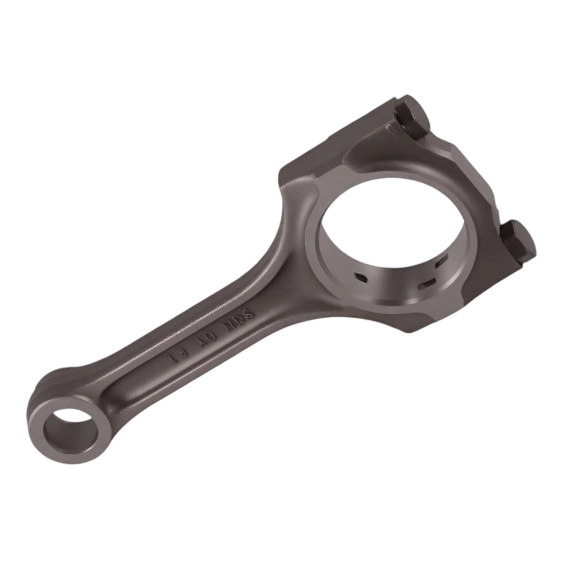
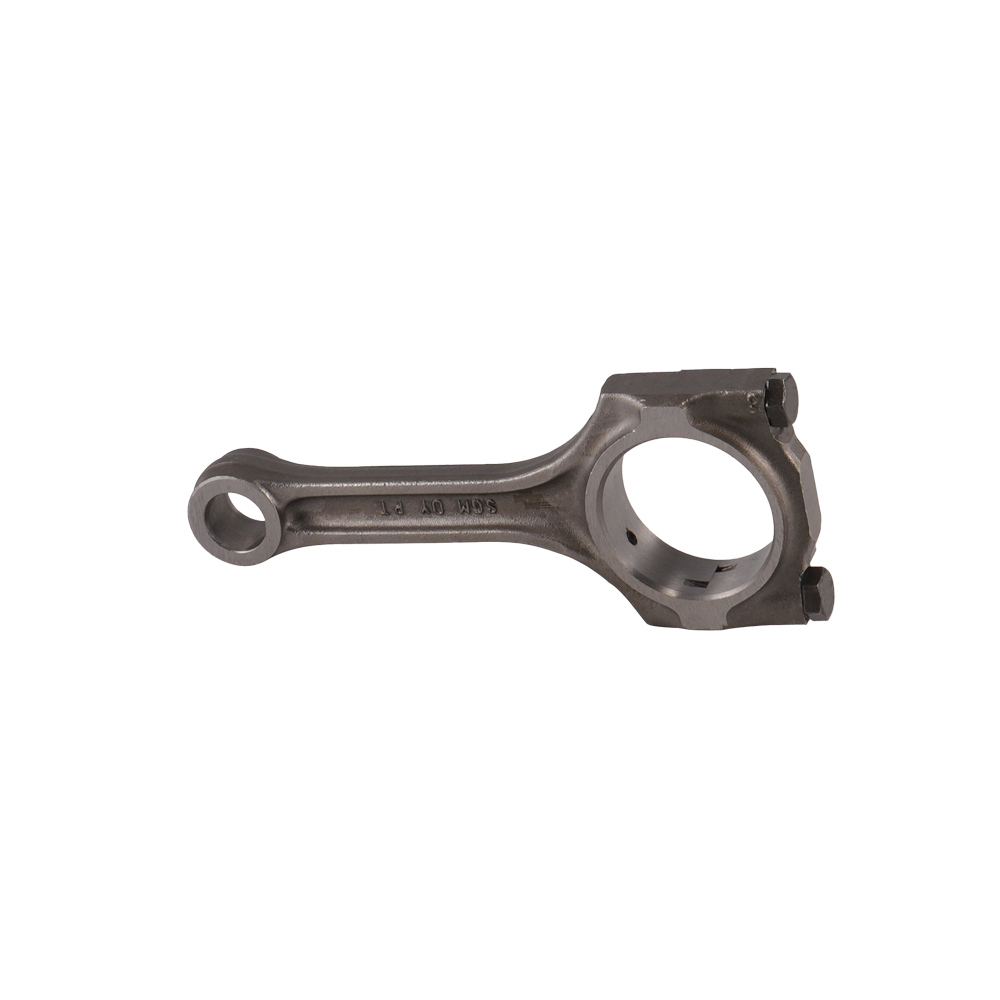
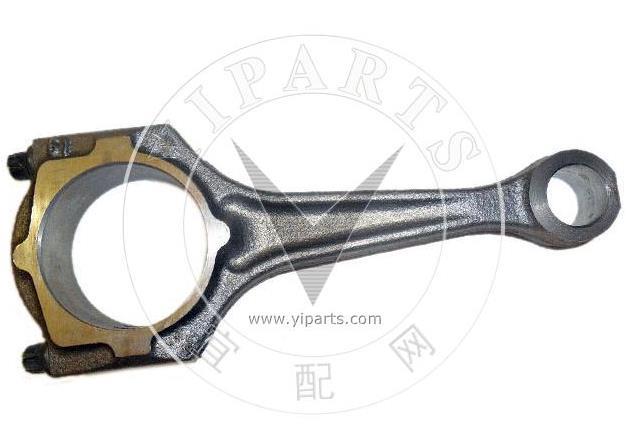

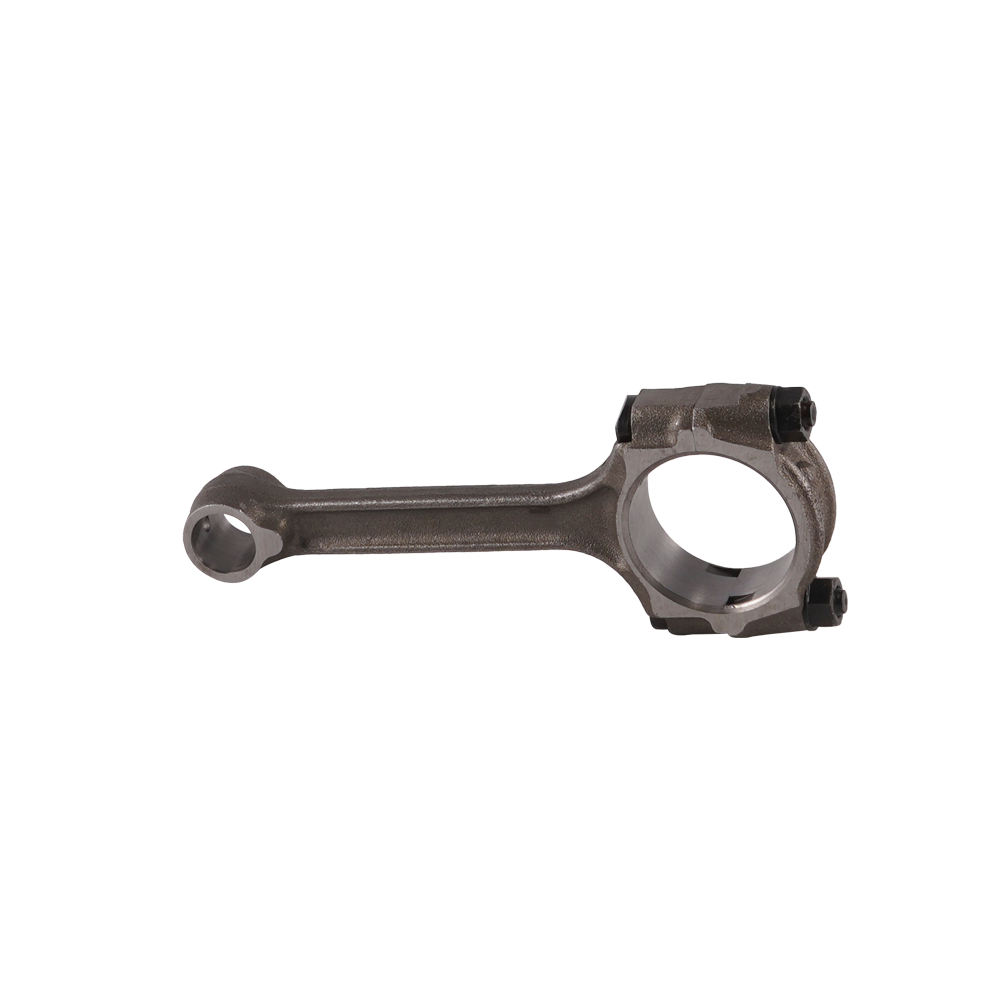
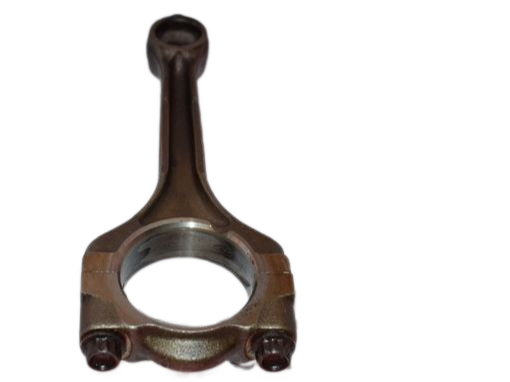
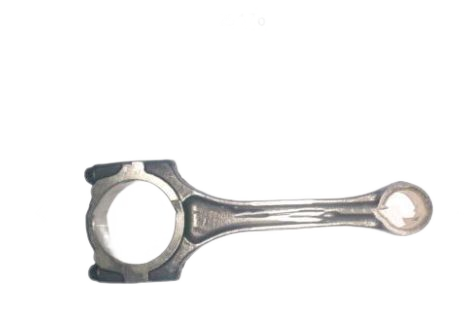
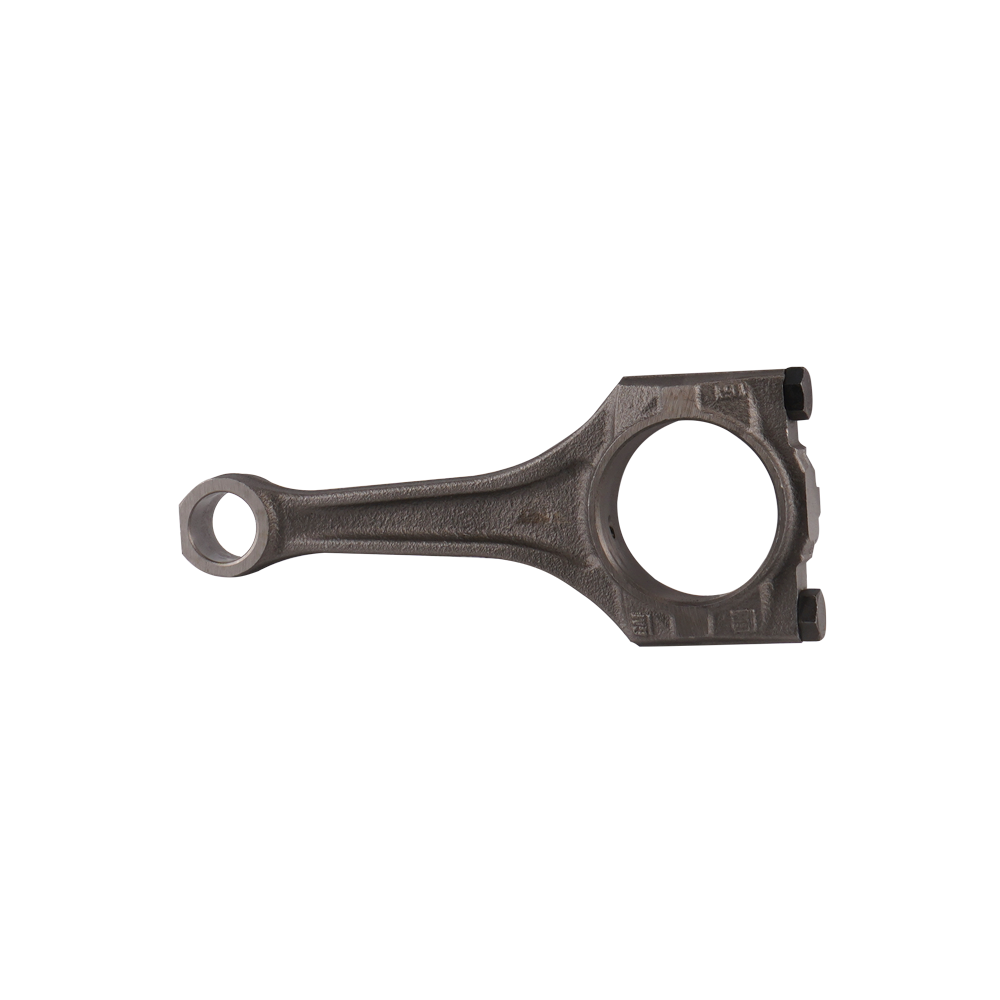
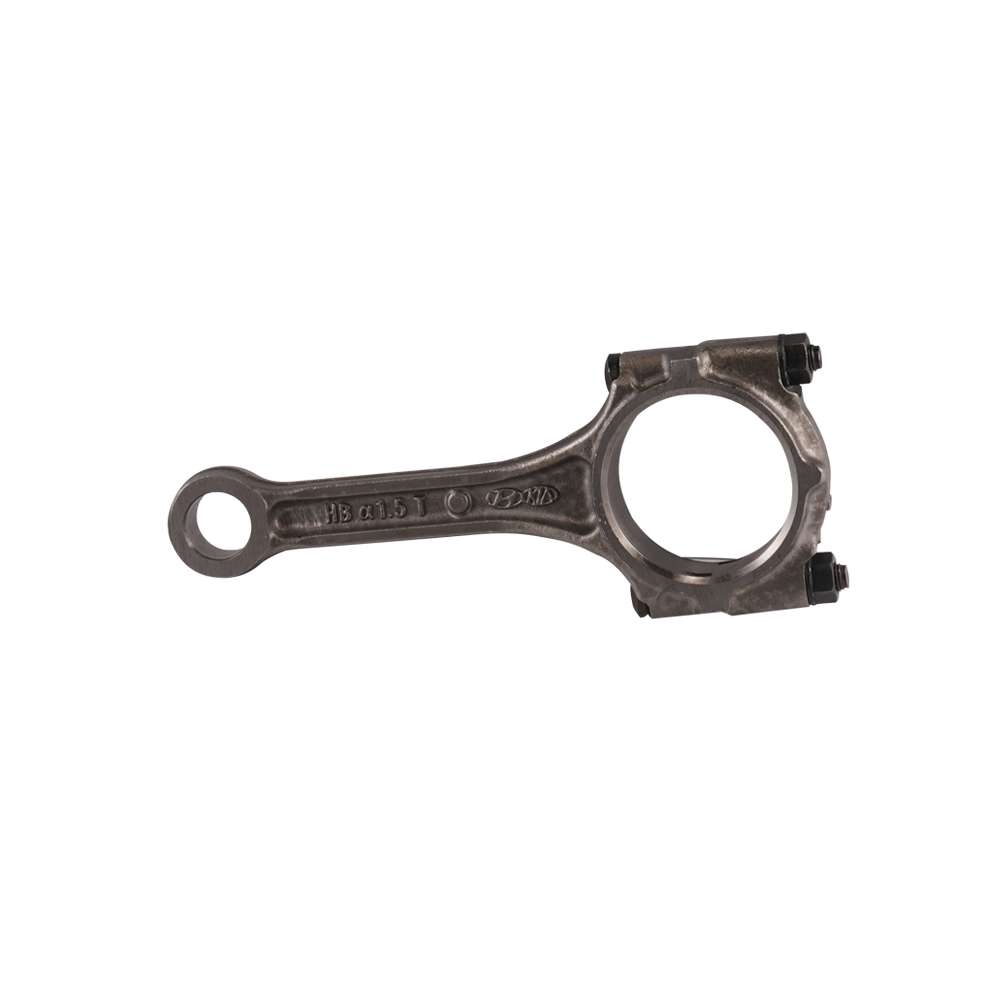
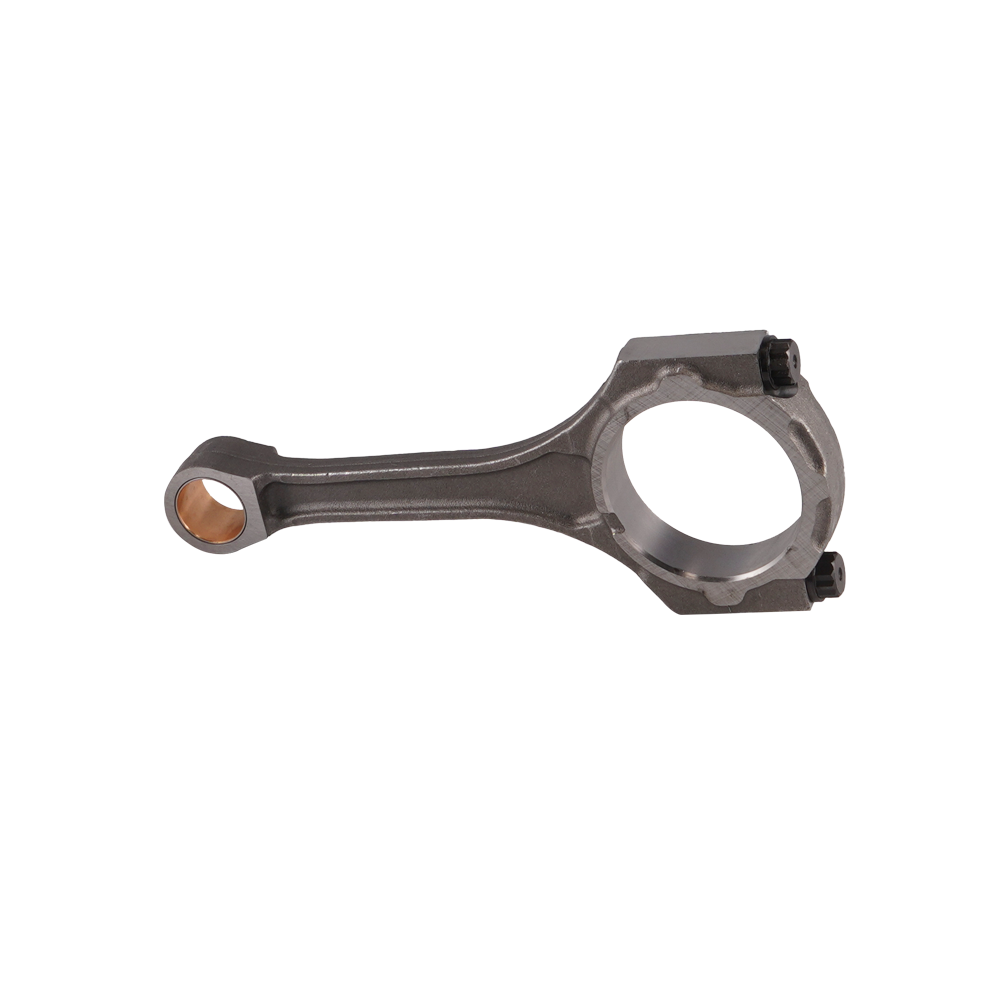
The connecting rod, or con-rod, is the vital link between the engine's piston and the crankshaft. Forged from high-strength steel alloy, it is subjected to immense forces—tensile, compressive, and torsional—during every engine cycle. Its "small end" connects to the piston via a wrist pin, while its "big end" bolts around a journal on the crankshaft. The connecting rod's primary function is to convert the linear, up-and-down motion of the piston into the rotational motion of the crankshaft, which is the very essence of how an internal combustion engine produces power.
Functions of a Connecting Rod
Convert Linear to Rotary Motion
Its fundamental job is to translate the linear force from the piston's power stroke into the torque that spins the crankshaft.
Transmit Immense Force
It endures and transmits thousands of pounds of force from the combustion event, as well as the inertial forces from the piston changing direction.
Provide Lubrication Path
Many rods have an internal oil passage to supply pressurized oil from the crankshaft journal up to the piston wrist pin, ensuring its lubrication.
Hold Rod Bearings
The precisely machined "big end" of the rod securely holds the two halves of the connecting rod bearing, which ride on a film of oil.
Symptoms of a Failing Connecting Rod
Connecting rod failure is among the most catastrophic events an engine can experience. Any symptom requires immediate shutdown of the engine to prevent total destruction.
Deep, Rhythmic Knocking Noise ("Rod Knock")
The classic symptom. A heavy, metallic knock from the lower engine that gets louder with RPM, caused by excessive clearance in a failed rod bearing.
Low Oil Pressure
A worn rod bearing creates a large gap where oil escapes, causing a dramatic drop in overall system oil pressure and triggering the warning light.
Visible Hole in Engine Block
The ultimate failure. The rod breaks ("throws a rod") and is violently forced through the side of the engine block, resulting in total engine destruction.
Glittering Metal in Oil
Fine, metallic particles (often copper or aluminum colored) in the drained oil are a definitive sign of bearing material disintegrating.
Connecting Rod vs. Piston
What is a Piston?
A piston is the cylindrical "plunger" that moves up and down inside the engine's cylinder bore. It forms a gas-tight seal with the cylinder walls via piston rings and is the component that is directly acted upon by the force of combustion.
| Attribute | Connecting Rod | Piston |
|---|---|---|
| Function | Links piston to crankshaft | Seals cylinder, transfers force |
| Motion | Complex swinging arc | Linear (reciprocating) |
| Location | Between piston and crankshaft | Inside cylinder bore |
| Failure Symptom | Deep knock | Slapping noise, oil consumption |
In the human body, the Piston is the foot pushing down, and the Connecting Rod is the leg that turns the pedal of a bicycle.