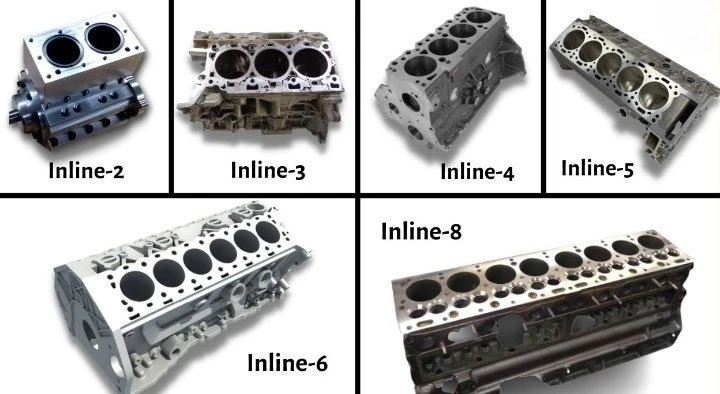
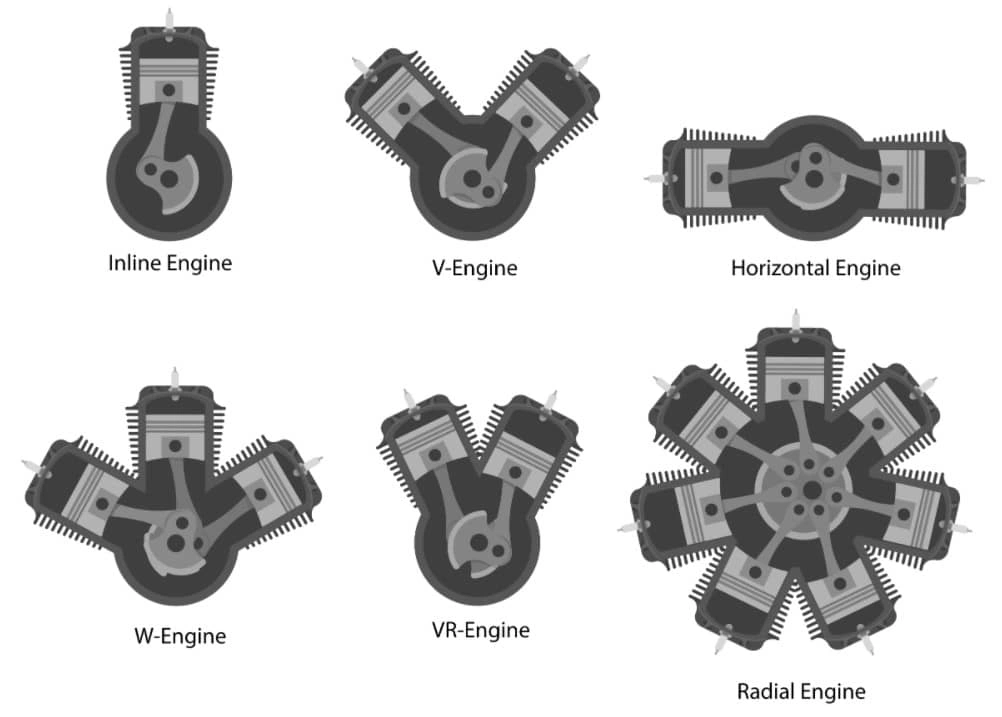
Engines come in different shapes, and two of the most common layouts are inline (or straight) and V engines. In an inline engine, all cylinders sit in a single row along the crankshaft. In contrast, a V engine arranges cylinders into two angled banks sharing one crankshaft – forming a “V” shape when viewed head-on. Typical configurations include inline-fours (I4) and inline-sixes (I6), versus V6s, V8s, or even V12s. As Wikipedia notes, V6, V8 and V12 layouts are the most common for six-, eight- and twelve-cylinder engines. These layouts affect engine balance, size, complexity, and ultimately how a car performs. Let’s break down how inline and V engines compare in design, packaging, performance, and real-world use.
Engine Design and Packaging
Inline (straight) engines line up all cylinders in one long block. With only one cylinder bank and one head, inlines are mechanically simpler: in fact, a straight engine “uses one cylinder head rather than two”. That means fewer parts – for example, a BMW I6 only needs two camshafts total, whereas a V6 (two banks of three cylinders) needs twice as many. With one head and a single exhaust manifold, an I4 or I6 is more compact top-to-bottom and loses less energy to internal friction. On the flip side, each additional cylinder makes the engine longer. Packing six cylinders in line makes the engine block very long, which can push into the firewall or hood – a real packaging challenge.
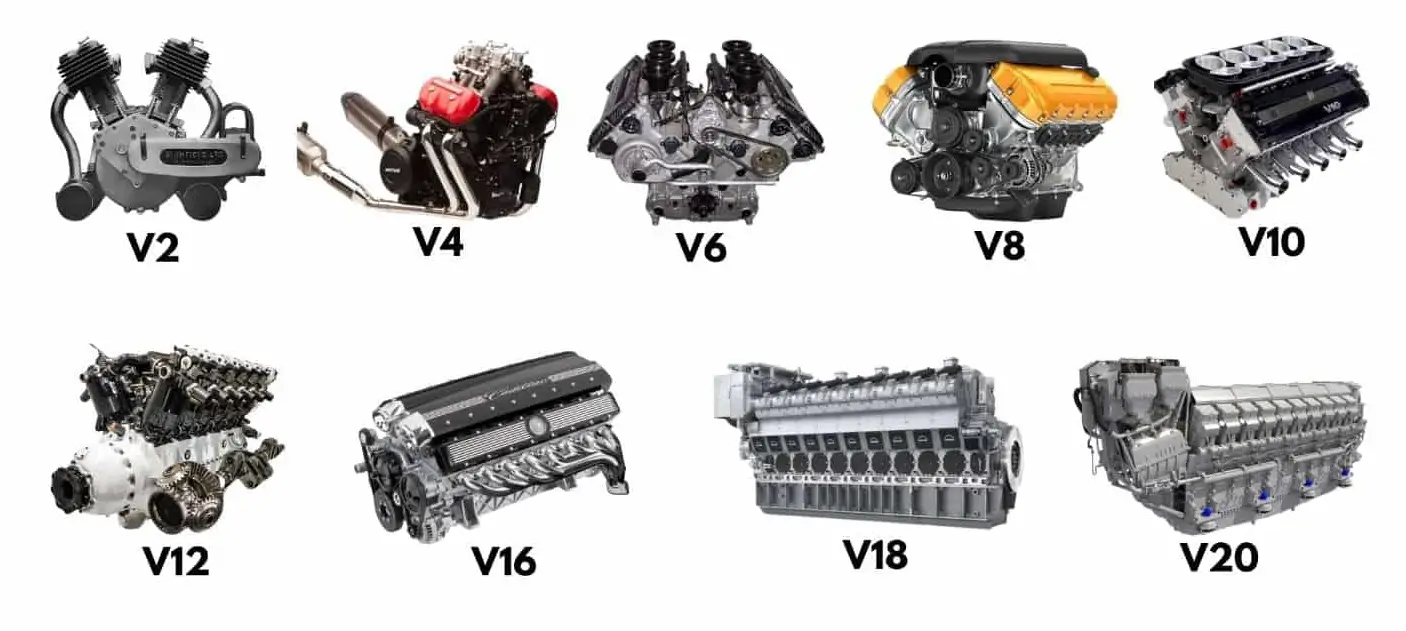
V engines bend the cylinders into two banks. This V6 (from an Alfa Romeo) has two banks of three cylinders each. The advantage is a much shorter engine length: a V engine “typically has a shorter length than equivalent inline engines, however the trade-off is a larger width”. In other words, a V6 of the same displacement as an I6 will be much shorter front-to-back (good for compact engine bays) but wider. V engines require two cylinder heads (one per bank), two valve-trains and usually two exhaust manifolds. This doubles certain components and adds weight and cost. However, the payoff is flexibility in packaging: a V6 is compact enough to fit transversely in a front-wheel-drive car or snugly in a tight engine bay. Many modern cars actually favor V-layouts because they let designers cram more cylinders (hence power) into shorter nose designs.
Complexity, Cost and Space Efficiency
Inline engines shine in simplicity. With a single head and valve train, manufacturing is generally cheaper and maintenance easier. For example, an inline-six shares one cam setup across all cylinders, unlike a V6 which has “two sets of cams”. Fewer parts means fewer things to go wrong and often better efficiency. In practice, an I4 is very easy to service – the top of the engine (one head) is accessible, and there’s only one set of spark plugs or gaskets to replace. With an inline layout “there is only one valve cover gasket needing replacement instead of two” (as on a V6).
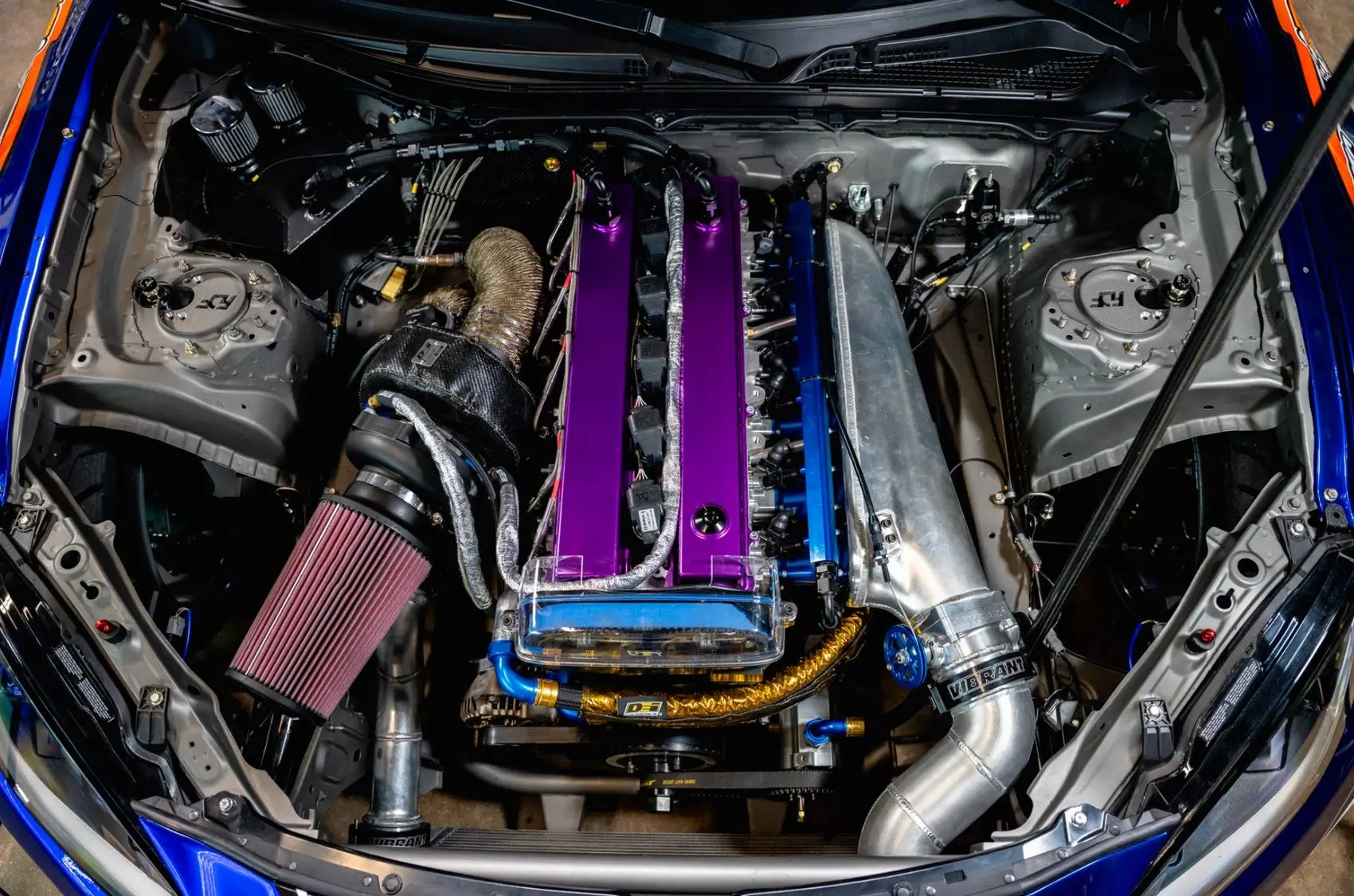
Nate Hamilton Toyota GR86 with a turbo 3.4 L 2JZ inline-six 03 – Engine Swap Depot
V engines, by contrast, are more complex and expensive. Two heads mean two full valve trains and exhaust manifolds, adding casting costs and weight. For instance, an engineer’s guide notes that a V6 has “two cylinder heads [which] means added cost, complexity, and weight” compared to a straight engine. The extra hardware also tends to raise the engine’s center of gravity and overall mass. On the upside, that added complexity buys much more power potential: a V engine can accommodate many cylinders without growing very long, and its rigid two-bank design can handle high horsepower and torque.
Space-wise, the trade-off is clear. Inline engines are narrower (one head) but long. They can dominate the front of the car or require a longer hood. That’s why traditional sports sedans with long hoods (classic BMWs, Jaguars, older American cars) used I6 engines. However, in a compact front-wheel-drive car there often isn’t room for a 2m-long engine. V6 and V8 engines, being short and stubby, fit into tighter engine bays and even allow transversely-mounted setups. As one source puts it, V6 engines are “compact and can easily be used for both FWD and RWD vehicles”. On the other hand, the wider profile means designers must make room on the engine bay sides or hood. In summary, an inline-6 offers simplicity and smoothness at the cost of length, while a V6/V8 offers a compact footprint (great for space efficiency and modularity) at the cost of extra parts and bulk.
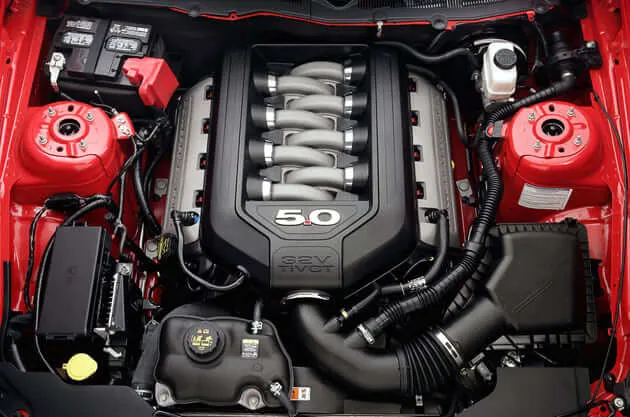
Mustang GT 5.0L V8 Engine
Performance and Efficiency
Performance depends more on engine size and tuning than layout. A clever engineer can tune an inline-4 to produce monster power – in fact, CarThrottle wryly notes that with enough money and mods, “a four-cylinder engine can make just as much power as a V12”. That said, the layouts do influence driving feel. Straight-sixes are famous for their silky character. Their normal firing order keeps pistons moving in perfect counterbalance, yielding “the smoothest engine out there”. This translates to linear power delivery and a refined exhaust note (enjoyed in cars like the Toyota Supra or BMW 335i). Inline-fours tend to have more vibration (due to secondary imbalance), so they’re usually limited to around 2.5–3.0 L unless the manufacturer adds balancing shafts. In practice, small cars with I4 engines (Honda Civics, Volkswagen Golfs, etc.) tune them for fuel economy and decent low-end torque.
V-engines allow larger displacement. A 3.0–5.0L V6 or V8 can shove a lot of air and fuel through the cylinders, giving high peak power. Modern turbocharging blurs the lines: a 2.0L I4 turbo might out-pull an old 4.0L V6. But traditionally, a V8 can make more horsepower easily. For example, the Nissan GT-R’s 3.8L twin-turbo V6 cranks out 592 hp, something a similarly-sized inline-six would struggle to match without extreme tuning. In terms of fuel efficiency, simpler engines usually have an edge: an inline-4’s light weight and single-head design tends to be more frugal than a heavy V8. (One guide notes an I4’s “fewer moving parts” mean less energy is lost to internal friction.) However, modern technology (direct injection, cylinder deactivation, hybrids) plays a huge role too.
Pros and Cons of Each Layout
Inline (straight) – Advantages
Fewer parts and inherently good balance. A straight-six’s normal firing order means its forces cancel out, giving a famously “silky smooth” power delivery. It needs only one cylinder head (and one bank of cams), reducing cost and weight. Maintenance is straightforward: there’s one valve cover and usually more side clearance for plugs. Disadvantages: The engine block is long and can be heavy at size. Packaging a long I6 is tricky, especially in front-wheel-drive cars. An inline engine’s length also means its crankshaft and block are less rigid than a compact V, which can raise the car’s center of gravity slightly.
V-type – Advantages
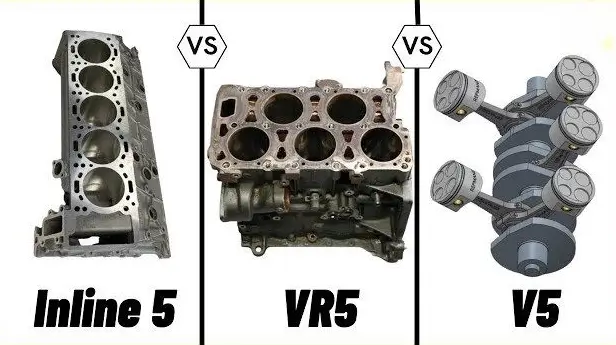
Short length and high cylinder count. A V6 or V8 can cram many cylinders (and lots of displacement) into a compact package, which is ideal for power and torque. For instance, an engineer explains that V8’s short packaging and large displacement make it a performance favorite. V6 engines are praised as being “compact” enough for nearly any drivetrain layout. The rigid two-bank design handles stress well and has a lower torsional vibration than a very long engine. Disadvantages: More parts and complexity. Two cylinder heads mean double the cams, heads and exhaust plumbing, which adds cost, weight and friction. A typical V6 (unless it’s a 120° design) isn’t naturally balanced – it “effectively consists of two inline threes joined together,” requiring balance shafts. V-engines also tend to sit a bit higher in the engine bay (higher center of gravity) and are wider, which can affect handling and require extra space.
Real-World Examples
Many well-known cars exemplify each layout. Inline-6 examples: Classic BMW 3-Series and 5-Series sedans used BMW’s smooth I6 engines for decades. Legendary sports cars like the Jaguar E-Type and Toyota Supra famously ran straight-six power. Even Nissan’s Skyline GT-R (R34) had the RB26 I6 under the hood. In contrast, almost every modern economy car – the Honda Civic, Toyota Corolla, Volkswagen Golf, etc. – uses an inline-4 under the hood because of its simplicity and efficiency.
V engine examples: On the V side, you’ll see V6s and V8s in many performance and family vehicles. The Nissan GT-R (R35) and Honda/Acura NSX use high-tech twin-turbo V6 engines. American muscle cars like the Ford Mustang and Dodge Challenger roar with V8s under their long hoods (Ford’s 5.0L “Coyote” V8, Chevy’s small-block V8, etc.). Trucks and SUVs often use V8s too (e.g. Ford F-150, Toyota Land Cruiser). Luxury sedans (e.g. modern BMW 5/7 Series, Mercedes S-Class) have alternated between V6 and V8 engines. Even exotic supercars use V engines – for example, Ferrari’s 488 uses a V8 and some Lamborghinis use a V10 (essentially a narrower V6).
Interestingly, the inline-six is making a comeback. A few years ago it seemed rare, but many brands are reintroducing turbocharged I6 engines. BMW and Mercedes have started putting new inline-6 engines in models that once had V6s, and Jaguar Land Rover and Mazda have also revived straight-sixes. This trend highlights how each layout still has its strong points – manufacturers are choosing the best engine shape to match a car’s needs.
In the end, neither layout is strictly “better” overall. If you want raw size and power in a small package (or need to fit a big engine transversely), a V6/V8 is often chosen. If you want classic smoothness and simplicity (and have the space), an inline-6 might be your friend. For everyday cars prioritizing cost and economy, inline-4’s reign. Car makers pick whichever architecture best suits the car’s goals, so you’ll continue to see both inline and V engines on the road for years to come.